Contents 7
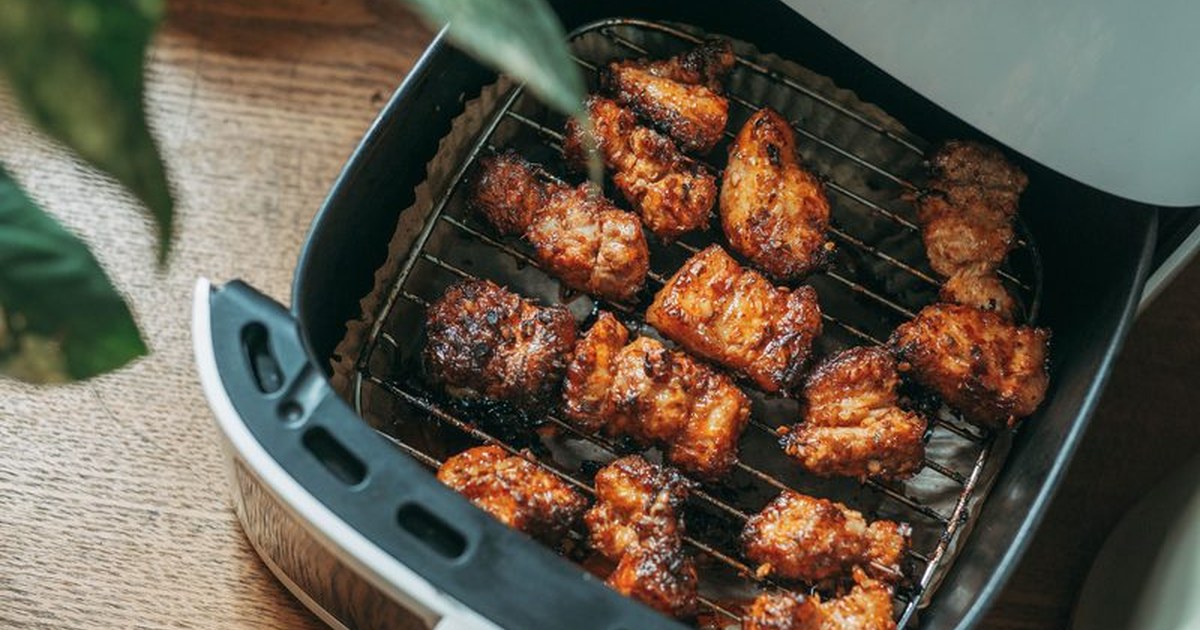
There's an uncomfortable truth in everyday cooking: the microwave heats, but it doesn't bring back the crunch. Reheating in an air fryer is the most direct alternative when you don't want yesterday's food to taste like yesterday's food. In this guide I'll tell you how I do it, how I choose the time, and which mistakes ruin more dishes than you'd think.
A heads-up right away: all the times and temperatures in this article are approximate. They depend on the air fryer model (wattage and airflow vary a lot between baskets), the amount you put in and the thickness of each piece. If it's your first time with a dish, start with the shortest time and check.
Equipment: the bare minimum for good reheating
- The air fryer, with a clean, dry basket.
- Parchment paper or a perforated accessory if your basket has a wide rack; don't use it if it blocks the airflow.
- A spatula or tongs to flip halfway.
- A plate or rack to let whatever you take out breathe: if you pile everything into a bowl, the moisture comes back.
You don't need oil for almost anything, but a thin thread of oil helps with breaded items and dry doughs. A spray bottle is handier than the oil bottle.
General steps with approximate times
- Preheat for a few minutes. Many models recommend it; the manual rules. Preheating helps keep the first batch from coming out pale, especially with doughs.
- Separate and dry. Spread the pieces in a single layer. If there's sauce, keep it aside and add it at the end: sauce in the basket is moisture, and moisture is the enemy of crispiness.
- Start at 160-180 °C (325-350 °F) for most foods and go up if needed. The specific temperature depends on your model and how delicate the dish is.
- Flip halfway. At the halfway point, take the basket out, move the pieces around and put them back. It's the step that changes the result the most.
- Watch the end. The last few minutes are the ones that burn. Open it and check the texture before extending the time.
Now, by dish, with ranges I use as a starting point:
- Pizza: 160-170 °C (325-340 °F), a few minutes. It depends on the thickness of the crust and how many toppings it has. Slices that aren't too thick work best.
- Yesterday's fries or roast potatoes: 180-190 °C (350-375 °F), a few minutes, shaking halfway. If the potatoes have sauce, they don't go in the basket.
- Battered and breaded items: 170-180 °C (340-350 °F), a short time, in a single layer. The thicker the coating, the more margin you need.
- Puff pastry or croissant: 160-170 °C (325-340 °F), a very short time. They dry out quickly; better to undercook.
- Roast chicken or meat in pieces: 170-180 °C (340-350 °F) until piping hot inside. Thickness is what matters; if the piece is big, cut it up first.
- Roasted vegetables: 170-180 °C (340-350 °F), a few minutes. Those that release a lot of water (zucchini, tomato) lose texture and don't improve.
- Rice and pasta: the air fryer isn't my first choice here; they tend to come out dry. If you reheat them, do it in a covered container with a little moisture, and accept that the result is different.
For frozen items that come pre-cooked, follow the package directions and use the air fryer as an oven: the package usually gives the reference temperature and time.
Tips that make the difference
- One layer, no piling. If you fill the basket, the air doesn't circulate and the food steams instead of crisping.
- Small batches. Two short batches work better than one big one.
- Take it out of the cold sensibly. If the leftover is very cold, the outside dries out before the inside heats up. Cutting it up or giving it a short blast of heat beforehand helps, but don't overdo it.
- Sauces on the side, always. Dressings, mayonnaise and tomato sauces are added when plating.
- Don't stack what you take out. Spread it on a plate and serve soon.
- Parchment paper with care. If it's loose it can touch the heating element; trim it or hold it down.
Common mistakes (and how to avoid them)
- Putting in too much. It's mistake number one. Half of all soggy leftovers are piled-up leftovers.
- Turning up the temperature to go faster. The outside burns, the inside stays cold. Be patient with medium temperatures.
- Putting in a dish with sauce. Sauce doesn't crisp: it sticks and smokes.
- Not flipping. The side touching the basket browns and the top stays pale.
- Reheating twice. Better to take out just the right portion. Whatever isn't eaten goes in the fridge as soon as possible.
- Trusting the clock and not the look. Time is a guide; your nose and your fingers decide.
When it isn't worth it
Some dishes don't come back. Salads, fried foods with lots of sauce, creamy soups and liquid stews gain nothing in the air fryer. For those, the saucepan or the microwave remain the right tool. The air fryer is a great ally for crispiness, not a magic wand.
Note
The times and temperatures in this article are approximate and depend on the air fryer model, the amount and the thickness of the food. Always check your appliance's manual and the package directions when reheating pre-cooked products. This text does not include nutritional data or food safety guidelines because no public source has been cited for them; if you need that kind of information, go to an official agency or a reputable source.